Total War: Warhammer 40,000 Officially Announced by Creative Assembly
By FinalBoss Intelligence Team · 5 min read
Executive bullets
- Creative Assembly has announced Total War: Warhammer 40,000, unveiled at The Game Awards 2025, taking Total War into the Warhammer 40,000 universe and onto consoles for the first time.
- The title debuts a new proprietary Warcore engine, planet-scale campaigns, and four asymmetric launch factions (Space Marines, Orks, Aeldari, Astra Militarum), signalling a long runway for IP and systems expansion.
- Day-one Steam Workshop support and later official tools aim to retain Total War’s PC mod ecosystem while the console versions push the franchise toward a broader mainstream audience.
- Post-launch factions, including confirmed Chaos Space Marines, and a stated “no blood pack DLC” and “no pre-order DLC” stance outline a live-service-style content plan with a relatively community-friendly monetisation posture.
- The staged communications roadmap (developer roundtable in December 2025, deep dives in spring 2026) sets expectations for a multi-year marketing and community build-out around one of SEGA and Games Workshop’s highest-profile strategy collaborations.
From Old World to 41st Millennium: Scope of the Shift
Total War: Warhammer 40,000 marks the first time in the franchise’s 25-year history that Creative Assembly has moved from historical or high-fantasy sandboxes into the grimdark science fiction of Warhammer 40,000. Revealed during The Game Awards 2025 with a pre-alpha trailer and an appearance by David Harbour as an in-universe character, the project extends a long-running Games Workshop partnership into a setting with substantially higher mainstream awareness than when the original Total War: Warhammer launched.
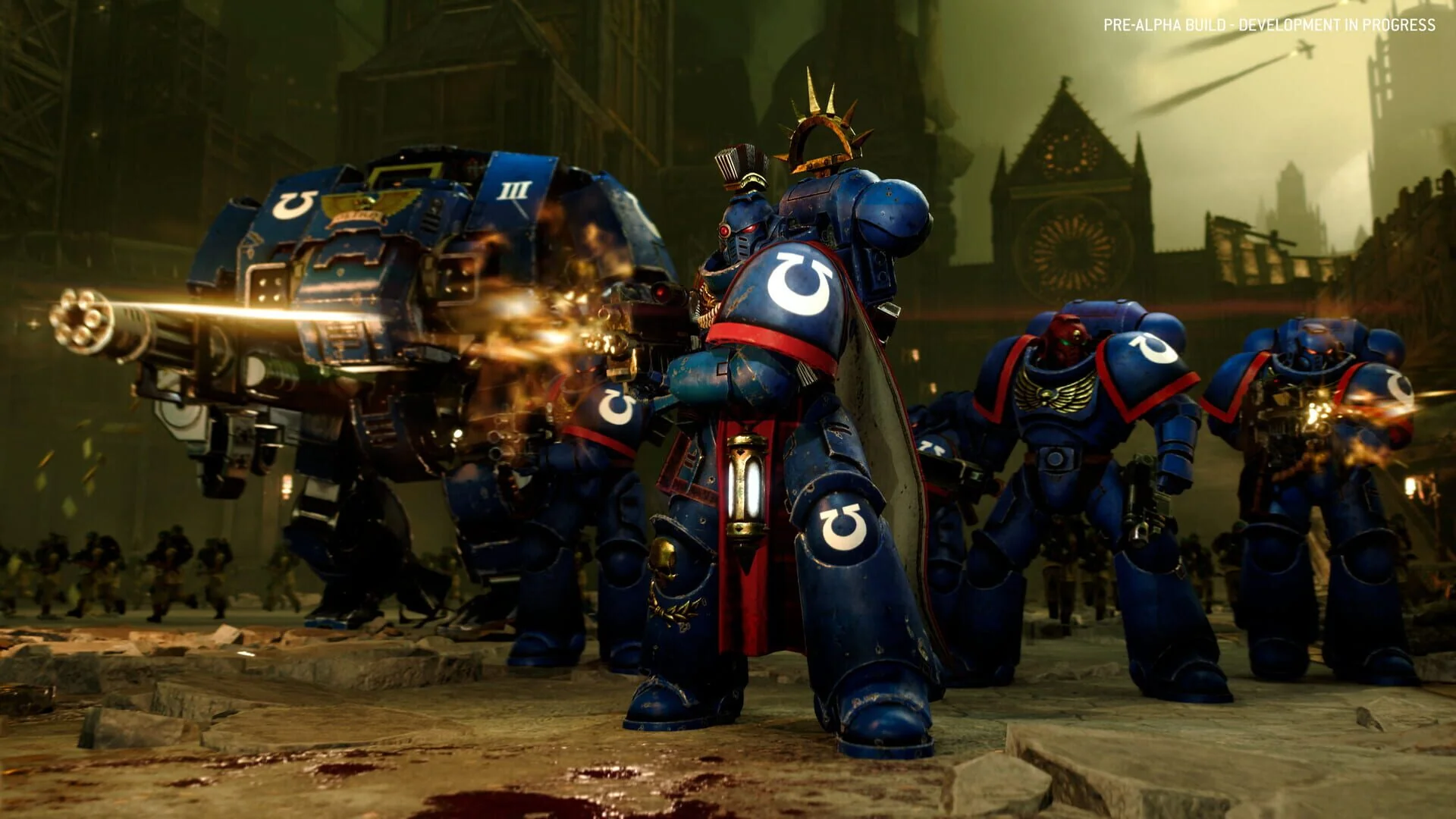
The game launches with four factions tightly aligned to established 40K archetypes: elite, low-count Space Marines; massed-human Astra Militarum; chaotic Ork hordes; and high-skill, fast-moving Aeldari. Each faction is positioned as mechanically distinct in campaign pacing, army composition, and battlefield role, drawing on the asymmetry that powered the Warhammer fantasy trilogy but applied to an Era Indomitus, planetary-invasion context rather than a single continent.
The high-level structure remains recognisably Total War: turn-based grand strategy for territorial expansion and resource management, feeding into large-scale real-time battles. The twist is scale: instead of provinces on a landmass, campaigns span planets, fleets, and orbital warfare, with the option to deploy superweapons capable of erasing entire worlds. This positions the game closer to a hybrid of traditional Total War, 4X, and space opera strategy than to a straight reskin of earlier Warhammer releases.
Warcore Engine: Technical Ambition and Risk
Total War: Warhammer 40,000 is built on Warcore, a new proprietary engine described as being purpose-built for planet-scale battles, destructive environments, and the visual density of 40K war machines. This is a significant departure from the long-evolved tech stack used for Rome II through Total War: Warhammer III, implying both upside in fidelity and risk in first-generation tooling and stability.
For SEGA and Creative Assembly, Warcore functions as both a technology bet and a potential long-term platform. If the engine proves performant across sprawling planetary battlefields and next-gen consoles, it can underpin future historical or fantasy Total War titles with expanded destructibility and scale. If it stumbles, there is reputational risk following a decade where Total War has been defined as a PC-first, mod-friendly strategy standard.
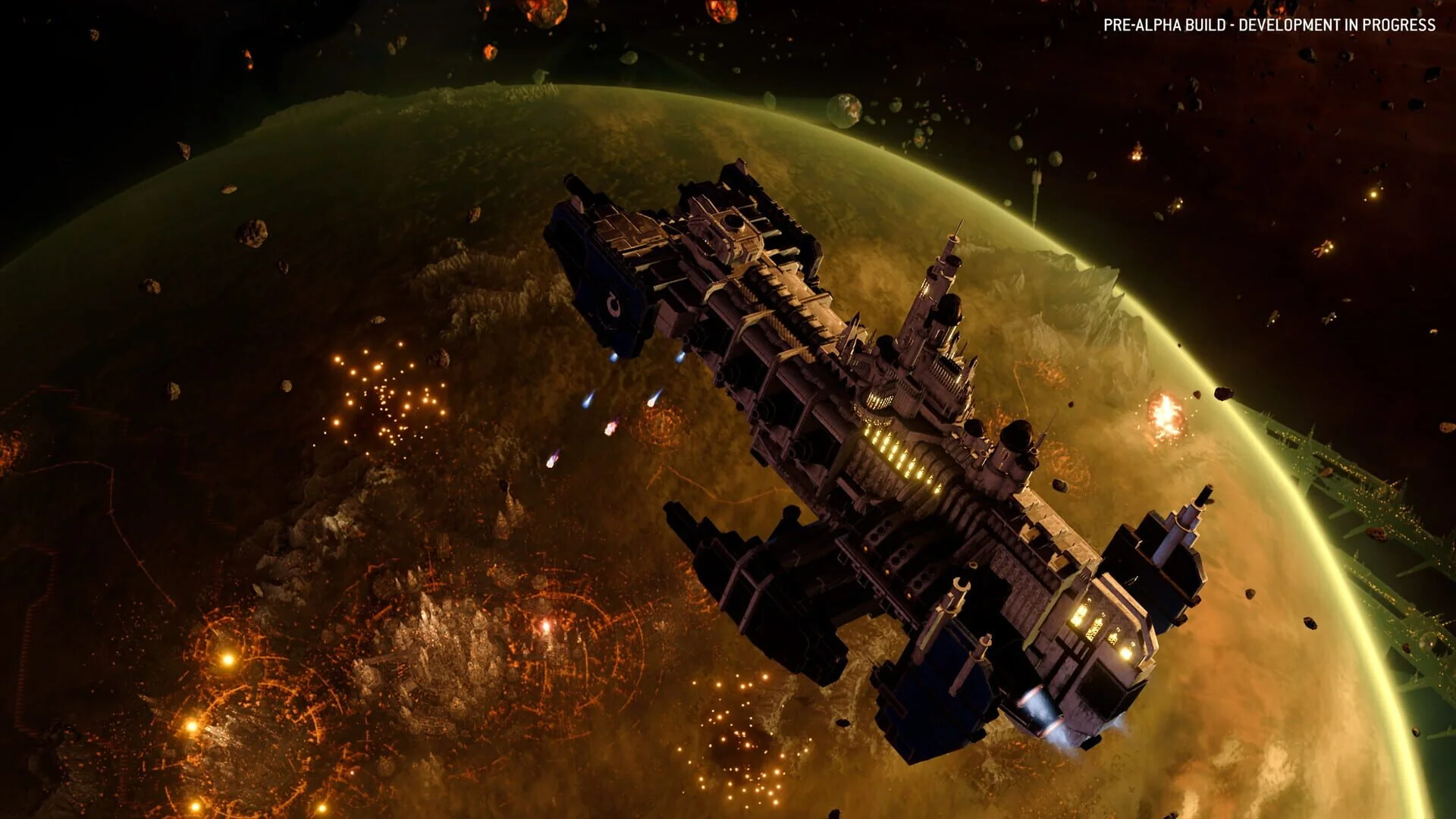
The involvement of veteran Games Workshop artist Paul Dainton on key art underscores an intent to match the visual identity of contemporary 40K media. Combined with high-profile casting like David Harbour, the project looks designed as a flagship representation of the 40K brand in strategy gaming, at a time when the IP is increasingly present across genres.
Console Debut: Platform Reach and Design Trade-offs
For the first time, a mainline Total War title is shipping day-and-date on PlayStation 5 and Xbox Series X/S alongside PC. Historically, Total War has been associated with mouse-and-keyboard, simulation-style complexity that rarely translates cleanly to controllers or living-room play patterns. A successful console implementation would materially broaden the addressable audience and anchor Total War as a cross-platform strategy brand rather than a PC niche.
This move aligns with wider trends in strategy and tactics titles making credible console transitions, but it forces interface, pacing, and tutorialisation decisions that can ripple back to the PC version. How Creative Assembly balances console accessibility with the series’ traditional depth will be a key signal for future Total War design philosophy.
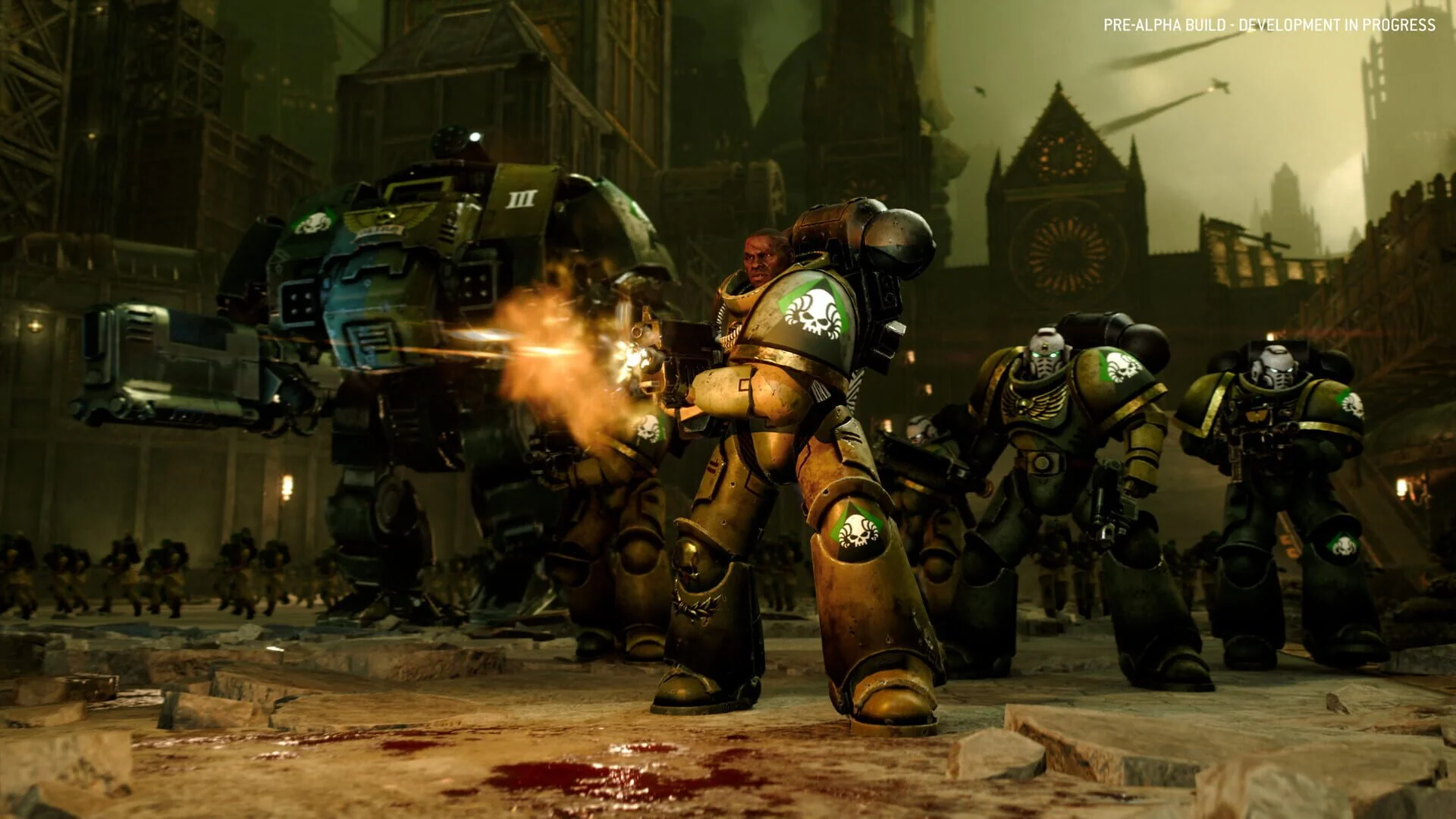
From the Warhammer 40,000 side, console presence dovetails with a broader mainstream push. Industry reporting shows Warhammer 40,000: Space Marine 2 has already reached 12 million players across platforms and services, underlining how far the IP has moved from tabletop niche to mass-market entertainment. Total War: Warhammer 40,000 slots into that trajectory as the flagship grand-strategy representation of the universe.
Modding, DLC, and Community Positioning
On PC, the Total War series has long relied on modding for tail-end engagement and community goodwill. Creative Assembly is committing to Steam Workshop support at launch, even while acknowledging that full official tools will arrive later due to the transition to Warcore. That stagger suggests internal tooling is still maturing, but also shows explicit recognition that mod ecosystems are a strategic asset rather than a tolerance.
Content-wise, the studio is already signalling a multi-year DLC arc. Chaos Space Marines are confirmed as post-launch content, with further factions described as part of longer-term plans. This mirrors the Warhammer fantasy trilogy model, in which new races, lords, and campaign scenarios extended the revenue and engagement curve far beyond initial release.
Two monetisation decisions are being foregrounded: no pre-order DLC and no separate blood pack DLC. In practical terms, that removes two flashpoints that have previously created friction in Total War communities. Blood, gore, and dismemberment are included in the base game, matching the tone of 40K without a separate micro-transactional gate. For Games Workshop and SEGA, this simplifies messaging while trading short-term DLC revenue for brand alignment and goodwill in a setting explicitly defined by “eternal war.”
Roadmap and Signals to Watch
The announcement came with a clear communications cadence. A developer roundtable, scheduled for December 16, 2025, is framed as an early look at the studio’s approach to the setting rather than a feature-complete gameplay reveal. The next major beat is planned for spring 2026, with in-depth breakdowns of campaign structure and battle systems. No release date, pricing, or PC specifications have been set publicly.
This staggered reveal suggests an extended pre-launch runway where community expectations can be shaped around asymmetric faction design, console performance, and Warcore’s technical state. Reaction from Total War and 40K communities has already been substantial, treating the project as a flagship strategy event rather than a side experiment, helped by the perceived success of the earlier Warhammer trilogy.
InsightsFinalBoss Signal: Total War: Warhammer 40,000 functions as a strategic convergence point: a new engine, a new platform footprint, and Games Workshop’s most commercially visible universe, all bundled into Creative Assembly’s highest-profile format. How effectively Warcore scales, how deep the console implementations run, and how disciplined the post-launch faction rollout becomes will indicate whether this is a one-off 40K experiment or the template for Total War’s next decade.
Get reports like this in your inbox
Weekly intelligence briefings for games industry professionals.
Related Briefings
Roblox Is Building AI Assistant Tools and Procedural Creation Systems
Roblox upgrades Studio’s AI into an agentic co‑developer with planning, procedural assets, and testing loops, deepening its UGC moat and safety risks.
Read the Full Briefing →Vitality make history as first team to win two Grand Slams
Team Vitality completes a historic second Intel Grand Slam at IEM Rio 2026 as ropz secures a record third Slam and ESL launches the next season.
Read the Full Briefing →Final Fantasy XIV Letter from the Producer Prepares for Trail to the Heavens
FFXIV’s Patch 7.5x adds major story, raids, Beastmaster, and a Jollibee tie-in, anchoring engagement ahead of the next expansion reveal at Fan Fest.
Read the Full Briefing →