EA just cut Apex Legends map without warning, but there is a good reason
By FinalBoss Intelligence Team · 5 min read
Respawn Entertainment and Electronic Arts have pulled the Storm Point map from Apex Legends’ live rotation mid-season after reports that the map was triggering crashes on certain devices. The removal, which comes roughly two weeks after Storm Point’s reintroduction in the Season 28 Aftershock event, breaks the battle royale’s usual map cadence in favor of platform stability across PC and consoles.
- Storm Point has been temporarily removed from all Apex Legends modes on all platforms after crash issues tied to the map’s activation.
- E-District (daytime) replaces Storm Point in rotation and is expected to remain in place for the rest of Season 28, altering the standard mid-season map rhythm.
- Respawn has not provided a timeline for Storm Point’s return, only stating that a “permanent fix” is in development.
- The move underscores a stability-first approach to live operations, even when it disrupts scheduled content cadence and competitive map expectations.
- Signals to watch include communication on root cause, telemetry around crash reductions, and whether future major map updates ship with more conservative rollout strategies.
What Changed: Storm Point Pulled Across All Modes
Storm Point, one of Apex Legends’ six core battle royale maps, was reintroduced into rotation as part of Season 28’s Aftershock event, which also added new “Wildcard” mechanics and balance updates. Roughly two weeks later, Respawn issued a small update announcing that Storm Point would be “temporarily removing [it] from map rotation on all modes” while the team chases a fix for a crash “occurring on specific devices when Storm Point is active.”
The change applies globally across platforms-PC, PlayStation 5, PlayStation 4, Xbox Series X/S, Xbox One, and Nintendo Switch-and affects all modes in which Storm Point would normally appear. Instead, the daytime variant of E-District now fills Storm Point’s slot in the rotation.
Breaking the Map Cadence: Live-Service Rhythm vs Stability
For years, Apex Legends has conditioned its audience around a relatively predictable map cadence. Traditionally, three maps are in rotation per split, with a switch at season start and another at the mid-season ranked reset. That rhythm supports player engagement, ranked planning, and content scheduling for creators and competitive teams.
By pulling Storm Point mid-split-outside of the standard rotation change—EA and Respawn are effectively stating that platform stability now trumps the established seasonal pattern. From an operations standpoint, this choice reduces the risk of recurrent crashes that can damage session reliability metrics, increase support load, and erode player trust, even at the cost of perceived content variety.
The disruption is especially notable given Storm Point’s role as a large, rotation-heavy map that often serves as a contrast to tighter maps like World’s Edge and the more recent E-District. Its removal narrows the experiential spread of the current rotation and concentrates play on denser layouts.
Impact on Player Segments and Competitive Ecosystem
Different player segments are exposed to this change in distinct ways. High-engagement battle royale players, particularly those focused on ranked progression, had been adjusting to Season 28’s map mix and Aftershock changes when Storm Point’s removal reset expectations. Scrim groups and competitive-focused communities often structure practice blocks around known map schedules; a mid-split removal forces rapid recalibration of drop strategies, rotations, and legend meta assumptions.
For more casual segments, the impact skews toward perception of variety and crash frequency. If the Storm Point issue was meaningfully raising crash rates on specific hardware, its removal can lead to a visible improvement in perceived stability. However, absence of detailed communication about which “specific devices” are affected leaves ambiguity for the broader base, which now experiences an extended E-District presence instead of the planned back-and-forth with Storm Point.
On the esports side, concerns about Apex Legends’ competitive environment have already been elevated, with pro players publicly questioning design decisions in ranked and tournament formats. Abrupt map changes driven by technical constraints add another variable to an ecosystem that values predictability for practice and broadcast planning, even if official esports map pools are managed separately from public rotation.

Technical and Platform Considerations
Respawn has not specified the root cause of the Storm Point issue, only that crashes occur “when Storm Point is active.” That phrasing suggests the bug may be tied to map-level assets, logic, or memory usage rather than a general engine regression, making removal of that specific environment the fastest way to stabilize affected sessions while debugging continues.
The reference to “specific devices” signals that the crash pattern may be hardware- or configuration-dependent, raising typical cross-platform QA challenges: reproducing issues across multiple console generations, PC configurations, and the Nintendo Switch’s more constrained hardware. Pulling the map simplifies both live support and telemetry analysis, as crashes tied to that content type should sharply decline, creating a clearer baseline for further investigation.
No ETA has been provided for Storm Point’s return, only a commitment to a “permanent fix.” In live-service practice, that often indicates that a meaningful code or asset change—rather than a quick configuration tweak—is being evaluated, which increases the likelihood that the substitute map (in this case, E-District) remains in place for the remainder of the season.
E-District’s Elevated Role and Design Implications
E-District, which quickly became a favored map for its dense urban design, strong verticality, and clear rotation routes, now occupies an even more central role in Apex Legends’ current seasonal experience. The daytime variant lacks some of the atmosphere of its original nighttime aesthetic but offers greater visual clarity, which can matter for both readability and competitive play.
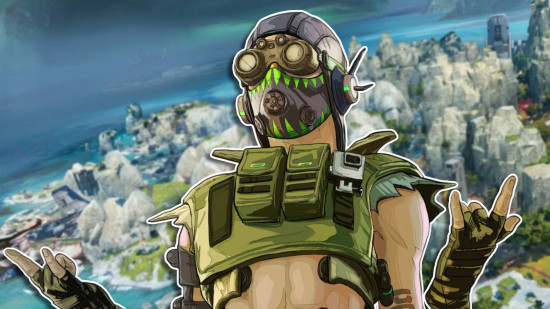
Extending E-District’s presence accelerates data collection on performance, heatmaps, legend pick rates, and engagement on that map relative to legacy staples like World’s Edge. The longer it stays in rotation as a Storm Point stand-in, the more its design strengths and pain points will be stress-tested at scale, informing future map tuning and possibly shifting long-term map hierarchies in both casual and competitive contexts.
Competitive and Market Context for Live-Ops Decisions
Within the broader shooter market, live-service titles increasingly face scrutiny when technical issues undermine otherwise strong content pipelines. High-profile examples in adjacent franchises have shown how persistent bugs or performance problems can offset the value of new maps or modes, leading to audience attrition even when launch metrics look strong.
Against that backdrop, EA’s decision to sacrifice a marquee map’s presence in Season 28 reinforces a platform-health-first approach. Rather than protecting seasonal marketing beats at all costs, the move elevates the operational priority of stability and crash rate reduction across the multi-platform footprint.
InsightsFinalBoss Signal
Storm Point’s removal is a clear signal that Apex Legends’ live-ops philosophy is shifting further toward aggressive intervention when specific content threatens baseline stability metrics. The decision shows a willingness to disrupt entrenched seasonal rhythms and map expectations in order to protect session reliability on PC and console. Signals to track now include the depth of Respawn’s post-mortem communication on the Storm Point issue, whether future major map reintroductions roll out with more staged testing or limited-time modes first, and how prolonged E-District exposure reshapes player preferences and competitive meta across the rest of Season 28.
Get reports like this in your inbox
Weekly intelligence briefings for games industry professionals.
Related Briefings
No Man’s Sky Xeno Arena Update Channels Pokémon, Lets You Raise, Train and Battle the Alien
Hello Games’ free Xeno Arena update layers Pokémon-style turn-based battles and a ranked Arena League onto No Man’s Sky, while boosting performance on PC…
Read the Full Briefing →UFC-Que Choisir attaque Ubisoft : le géant français priverait les joueurs de ce jeu qu’ils ont
UFC-Que Choisir’s case against Ubisoft over The Crew’s server shutdown challenges revocable-license norms and could reshape digital game access rules.
Read the Full Briefing →タイムトラベル・コマンドバトルRPG『アナザーエデン ビギンズ』9月17日発売へ。古代・現代・未来と時を駆け仲間と出会う、『アナザーエデン』シリーズ最新作
Another Eden Begins launches Sept 17, 2026 as a premium time-travel JRPG on Switch 2, Switch, and Steam, signaling a console-first reset for the…
Read the Full Briefing →